  • Free Local Delivery over $100!
  • Join the Kanna Collective and get a Kanna seltzer!

Terpenes 101

| sam bruton
Text on a pink geometric background reads: "Terpenes 101: What are they, and what do they do?.

What Are Terpenes?

Terpenes are organic compounds found in cannabis and various other plants, contribute to the distinct scent and flavor of the plant. While not exclusive to cannabis, these natural compounds are abundant in flowers, trees, herbs, fruits, vegetables, and even microbes. They serve various purposes for plants, such as repelling pests or attracting pollinators.

The utilization of volatile plant terpenes in alternative medicine, such as aromatherapy, has demonstrated certain benefits, a phenomenon also observed with cannabis terpenes. Depending on the ratios of terpenes and cannabinoids, the overall experience can differ significantly.

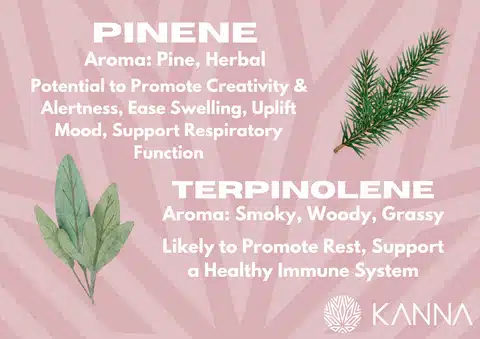
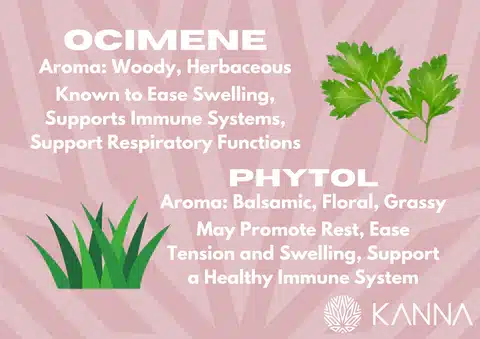
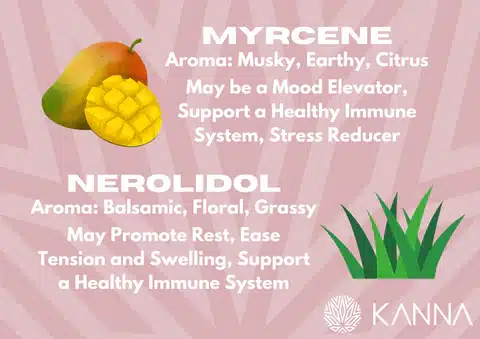
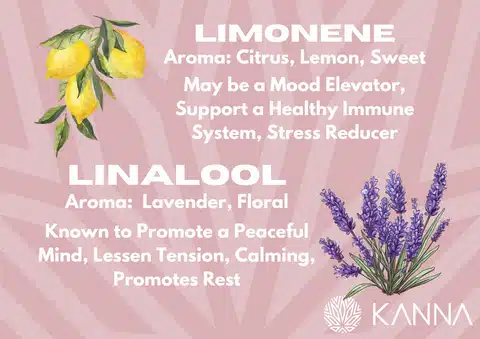
For some cannabis enthusiasts, terpenes are considered the primary influencers in the effects of different cannabis strains. However, due to the ongoing federal illegality of cannabis, extensive research on terpenes and flavonoids is still pending. Nevertheless, seven major terpenes have been identified in cannabis: myrcene, limonene, pinene, linalool, beta-caryophyllene, ocimene, and terpinolene. Refer to our chart below for detailed information on each terpene and its potential benefits.

What Do They Do?

Terpenes are believed to shield plants from adverse weather conditions and predators. Both cannabis researchers and consumers employ terpenes as a means to categorize cannabis products and anticipate their effects. The prevailing hypothesis suggests that the terpene profile, along with cannabinoid content, collaborates to produce the effects associated with different strains. This may elucidate why two strains with identical THC levels can yield vastly different experiences.


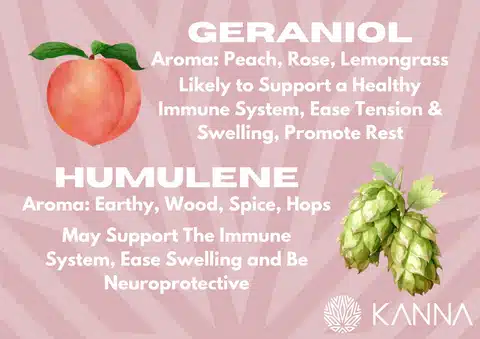
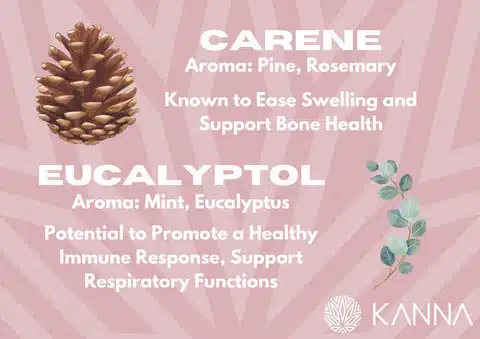
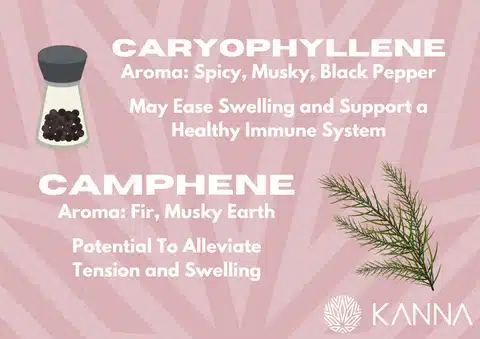
View our guide about each cannabis terpene below!
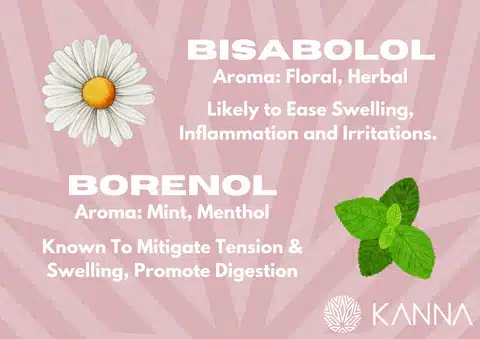
 

Infographic describing bisabolol (floral, herbal aroma, eases swelling) with a daisy and borenol (mint aroma, mitigates tension) with mint leaves on a pink background. Infographic about valencine with an image of a grapefruit, describing its aroma as sweet, citrus, grassy, and noting possible health benefits such as easing swelling and supporting immunity. Informational graphic describing pinene and terpinolene, their aromas, and potential health benefits, alongside illustrations of pine needles and leaves. Logo for Kanna in lower right corner. Informational graphic listing ocimene and phytol, their aromas, potential health benefits, and accompanied by illustrations of leaves. Kanna logo is at the bottom right. Infographic describing myrcene and nerolidol: their aromas, potential health benefits, and illustrated with a mango and grass. "KANNA" logo at the bottom right corner. Illustration of lemons and lavender next to text describing limonene and linalool, their aromas, and associated benefits for mood, immunity, relaxation, and rest. "KANNA" logo in bottom right. Illustration showing descriptions of geraniol and humulene, their aromas, potential health benefits, and images of a peach and hops, with the Kanna logo at the bottom right. Illustration showing information about carene and eucalyptol, their aromas, and potential health benefits, with images of a pine cone and eucalyptus branch. Infographic describing caryophyllene and camphene, their aromas, and potential health benefits, with images of black pepper and a pine branch, and the Kanna logo.

Skip to content