• Free Local Delivery over $100!
  • Join the Kanna Collective and get a Kanna seltzer!

Author: sam bruton

The Deception of Some Percentages

Navigating the complexities of cannabis purchasing solely based on THC percentage might seem like a logical approach. After all, higher THC levels generally suggest a stronger high, right? However, this isn’t always the case.


Consumers are often misled, and the cannabis industry suffers as a result. We understand that changing people’s minds can be challenging, especially when there’s an ego attached to selecting products based on THC content. Our goal is to provide education to those open to listening, empowering you to spend your money wisely, avoid scams, and contribute to positive changes in the industry.

Let’s delve into the science behind THC and uncover important truths that savvy cannabis consumers should consider.

Understanding THC:

Distribution and Limits: THC (tetrahydrocannabinol) is the compound responsible for the psychoactive effects of cannabis. However, it’s primarily concentrated in trichome heads—those small, shiny structures on cannabis buds. It’s important to note that an entire cannabis flower cannot consist solely of trichome heads. Therefore, the maximum THC content in a strain is around 35% by dry weight, with high-THC strains typically ranging from 18-30%. The theoretical maximum for flower is around 34%, because other components of the plant must be present such as proteins and minerals. Be very skeptical if you see anything higher than 34%. Here is an example of a product that is misleading customers:
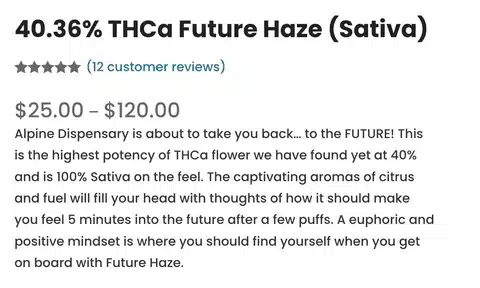
Product listing for 40.36% THCa Future Haze (Sativa) flower, priced $25–$120, with a description highlighting its potency and effects, and showing a 5-star rating from 12 reviews.

Degradation Over Time: THC degrades over time, transforming into other compounds like CBN and CBG, which doesn’t produce the same high. Proper storage in airtight containers, away from light and at a stable temperature, is crucial to preserving potency. Be mindful of the harvest date when evaluating THC percentages.


Plant Variability: Cannabis plants are not uniform. Factors like light exposure and position on the plant can influence trichome production, affecting THC levels. Laboratories test small samples, so variations within strains are expected. Samples are taken from the top, middle and bottom of the plant. These percentages are then averaged to get an overall test of the entire plant and strain. Your purchase could contain bud from only the top or just the bottom of the plant. So, keep in mind this number is not set in stone.


Testing Integrity: There have been instances of fraudulent practices in testing, with labs and farmers manipulating results to inflate THC percentages. Be cautious of claims exceeding 30% THC and look for transparency in testing protocols.


Genetic Factors: Genetics play a significant role in THC potency. Sudden spikes in THC levels for traditional strains warrant scrutiny. Consumers should question inconsistencies in reported THC percentages.


Entourage Effect: High-THC strains often lack other beneficial compounds like CBD and terpenes due to competition within trichomes. The entourage effect, where multiple compounds enhance each other’s effects, may be more pronounced in balanced strains.


Trimming Impact: Trimming practices can affect THC content. Machine trimming or overhandling can lead to trichome loss, impacting potency.


Recommendations for Savvy Consumers:

  • Look beyond THC percentages. Consider aroma, flavor, and overall effect.
  • Familiarize yourself with reputable farms and their practices for consistency.
  • Explore strains based on personal preferences, similar to selecting wine based on varietal and vintage.

Industry Impact:

The industry’s emphasis on THC levels may inadvertently promote the black market and overlook other quality indicators. Alternative approaches, such as highlighting terpenes and capping THC values for a more comprehensive view, could enhance consumer understanding and product diversity.

Focusing solely on percentages when buying is an oversimplified approach that can lead to disappointment. As a savvy consumer, consider factors beyond percentages, such as aroma, flavor, and the overall effect you seek, as terpenes and other cannabinoids play a HUGE factor in your overall experience.
THCa vs THC: Understanding Cannabis Compounds

The world of cannabis is complex and incredibly varied. The plant is filled with an array of compounds, each with distinct properties and effects. However, two cannabinoids that frequently spark discussion are Tetrahydrocannabinolic Acid (THCA) and Tetrahydrocannabinol (THC). To those unfamiliar with the intricacies of cannabis chemistry, the difference between these two may seem negligible. Yet, the distinction is significant. So, let’s dive into the world of “THCA vs THC” and explore what separates these two compounds.


THCA: The Non-Psychoactive Precursor

Firstly, it’s important to understand that all cannabinoids, including THCA and THC, originate from Cannabigerolic Acid (CBGA). In the plant’s natural state, enzymes transform CBGA into three main cannabinoids, one of which is THCA like those found in Purple Runtz Hyrbid. Therefore, THCA is actually the precursor to THC, a relationship that is pivotal in understanding the “THCA vs THC” debate.

THCA is found in raw and live cannabis. Contrary to popular belief, if you were to consume raw cannabis, you wouldn’t experience the psychoactive effects often associated with THC. Why is that? Simply because THCA is a non-psychoactive compound. This means it doesn’t produce the “high” commonly linked with cannabis consumption. Instead, THCA like Gumbo THCA Indica has been associated with potential health benefits, including anti-inflammatory and neuroprotective properties, although research is ongoing and more concrete evidence is needed.


Decarboxylation: The Transformation to THC

The transformation from THCA to THC occurs through a process called decarboxylation. This is essentially a fancy term for applying heat. When cannabis is smoked, vaped, or cooked, the heat causes THCA to lose a carboxyl group in the form of carbon dioxide. This decarboxylation turns THCA into THC, the psychoactive compound known and loved by many recreational and medicinal cannabis users.


THC: The Psychoactive Component

The key difference between THCA and THC, therefore, lies in their psychoactive properties. THC is the compound responsible for the intoxicating effects or the feeling of being “high” that follows cannabis consumption. It interacts with the endocannabinoid system in the human body, particularly the CB1 receptors in the brain, to produce its effects. THC has also been found to offer potential therapeutic benefits, including pain relief, appetite stimulation, and reduced nausea.


Usage and Consumption Differences

THCA and THC also differ in how they’re used and consumed. As mentioned earlier, THCA is present in raw cannabis like those found in Goon flower. Therefore, it can be consumed directly from the plant, used in juicing, or included in raw cannabis edibles. THC, on the other hand, requires heat for activation, making it the predominant cannabinoid in smoked or vaporized cannabis and cooked or baked edibles.


Legal Considerations

In terms of legality, both THCA and THC fall under the same category. Despite THCA being non-psychoactive, it’s still considered a controlled substance in many jurisdictions because of its potential to convert into THC. However, with the evolving landscape of cannabis laws, it’s always wise to stay updated with the current legal status in your region.

Our online and in person stores in Charlotte, NC carry THCA flower that is Hemp Based. Due to the Farm Bill in 2018, our products are legal to purchase online. Shop our legal THCA flower here.


Conclusion:

In summary, the “THCA vs THC” debate essentially comes down to understanding the transition from one compound to the other. THCA is the non-psychoactive precursor found in raw cannabis, offering potential therapeutic benefits without the high. On the other hand, THC, derived from THCA through decarboxylation, provides the psychoactive effects associated with cannabis alongside its own set of potential medicinal advantages.

Understanding the difference between THCA and THC can help consumers make more informed decisions about their cannabis use, whether for recreational or medicinal purposes. As the cannabis industry continues to evolve and research expands, our comprehension of these compounds and their effects will only become more nuanced, helping users to maximize the benefits of this versatile plant.

Text on a pink geometric background reads: "Terpenes 101: What are they, and what do they do?.

Terpenes 101

What Are Terpenes?

Terpenes are organic compounds found in cannabis and various other plants, contribute to the distinct scent and flavor of the plant. While not exclusive to cannabis, these natural compounds are abundant in flowers, trees, herbs, fruits, vegetables, and even microbes. They serve various purposes for plants, such as repelling pests or attracting pollinators.

The utilization of volatile plant terpenes in alternative medicine, such as aromatherapy, has demonstrated certain benefits, a phenomenon also observed with cannabis terpenes. Depending on the ratios of terpenes and cannabinoids, the overall experience can differ significantly.

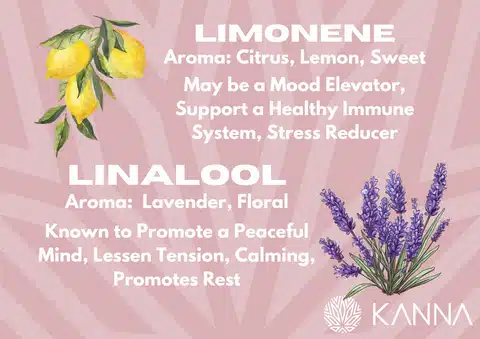
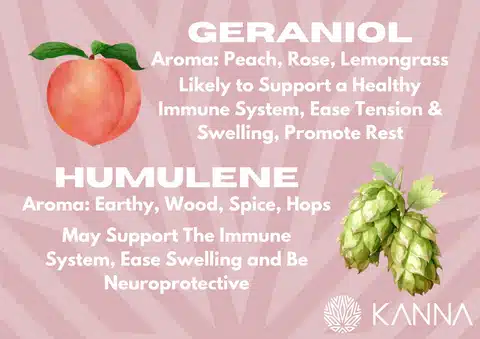
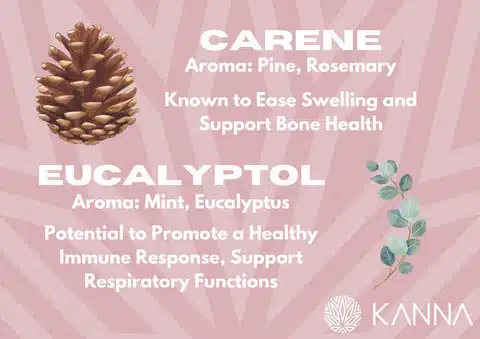
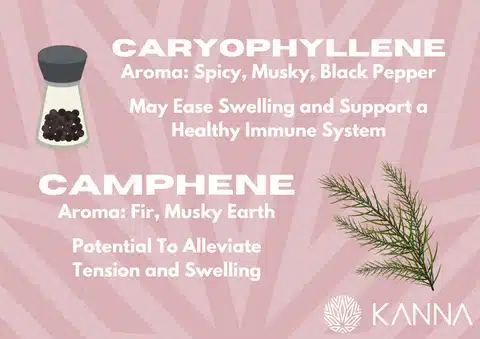
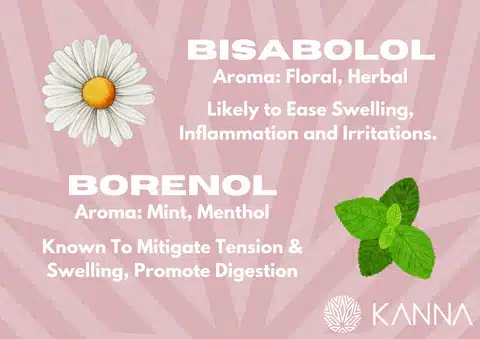
For some cannabis enthusiasts, terpenes are considered the primary influencers in the effects of different cannabis strains. However, due to the ongoing federal illegality of cannabis, extensive research on terpenes and flavonoids is still pending. Nevertheless, seven major terpenes have been identified in cannabis: myrcene, limonene, pinene, linalool, beta-caryophyllene, ocimene, and terpinolene. Refer to our chart below for detailed information on each terpene and its potential benefits.

What Do They Do?

Terpenes are believed to shield plants from adverse weather conditions and predators. Both cannabis researchers and consumers employ terpenes as a means to categorize cannabis products and anticipate their effects. The prevailing hypothesis suggests that the terpene profile, along with cannabinoid content, collaborates to produce the effects associated with different strains. This may elucidate why two strains with identical THC levels can yield vastly different experiences.


View our guide about each cannabis terpene below!


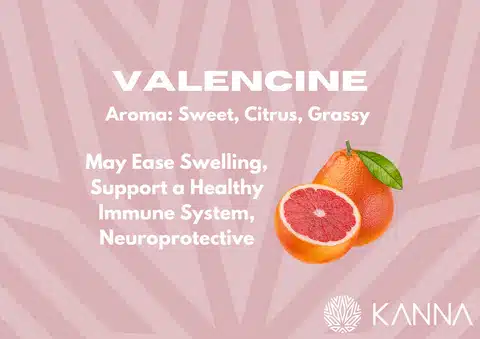
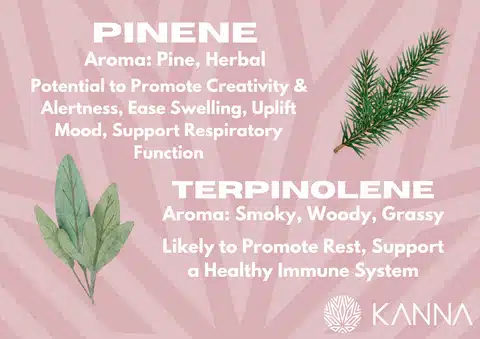
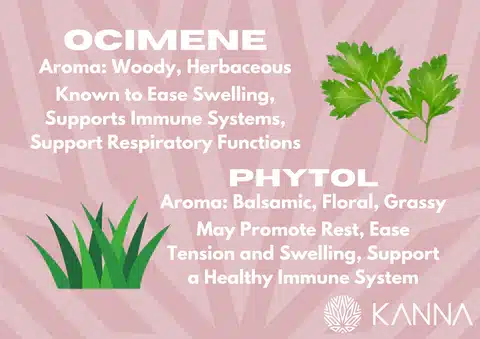
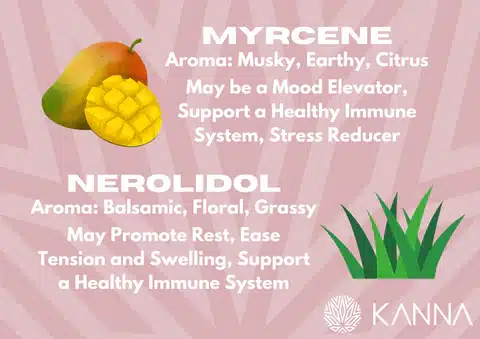
Infographic describing bisabolol (floral, herbal aroma, eases swelling) with a daisy and borenol (mint aroma, mitigates tension) with mint leaves on a pink background. Infographic about valencine with an image of a grapefruit, describing its aroma as sweet, citrus, grassy, and noting possible health benefits such as easing swelling and supporting immunity. Informational graphic describing pinene and terpinolene, their aromas, and potential health benefits, alongside illustrations of pine needles and leaves. Logo for Kanna in lower right corner. Informational graphic listing ocimene and phytol, their aromas, potential health benefits, and accompanied by illustrations of leaves. Kanna logo is at the bottom right. Infographic describing myrcene and nerolidol: their aromas, potential health benefits, and illustrated with a mango and grass. "KANNA" logo at the bottom right corner. Illustration of lemons and lavender next to text describing limonene and linalool, their aromas, and associated benefits for mood, immunity, relaxation, and rest. "KANNA" logo in bottom right. Illustration showing descriptions of geraniol and humulene, their aromas, potential health benefits, and images of a peach and hops, with the Kanna logo at the bottom right. Illustration showing information about carene and eucalyptol, their aromas, and potential health benefits, with images of a pine cone and eucalyptus branch. Infographic describing caryophyllene and camphene, their aromas, and potential health benefits, with images of black pepper and a pine branch, and the Kanna logo.

Text on yellow patterned background reads: "It may be surprising to learn that OTC painkillers like Tylenol blunt not only physical pain, but emotional pain as well.

CBD vs Tylenol

For YEARS, we haven’t really understood the physiologic pathway that Tylenol or acetaminophen uses to blunt pain. Research has recently shown that Tylenol utilizes the inherent #endocannabinoid system (ECS) in the body. (you’ll learn more if you take my #cannabis course). We all have this system, which is the most widespread G protein-coupled system in the body. They just completely left the system out of our #medical textbooks. The ECS controls pain, movement, joy, hunger & even part of the trauma response. Turns out Tylenol uses this system to decrease prostaglandin release. When mice have their CB1 receptors removed or knocked out, the Tylenol simply did NOT WORK for pain, meaning some metabolite of acetaminophen binds to & activate cannabinoid receptors.
????
This ECS-Tylenol connection makes sense to me. Think about it. We all know #cannabis can be an escape that blunts emotional or physical pain. So if Tylenol is utilizing the same or a similar pathway in the body, it is logical to infer that this med might blunt both physical & emotional pain. In fact, a study in 2015 in Frontiers of Psychology proved this. Researchers conducted 2 experiments testing whether Tylenol blunted individuals’ evaluations of & emotional reactions to both negative & positive images from the International Affective Picture System. Participants who took Tylenol evaluated unpleasant stimuli less negatively & pleasant stimuli less positively, compared with participants who took a placebo. Participants in the acetaminophen condition also rated both negative & positive stimuli as less emotionally arousing.
????
Finally, mamas—please do not give Tylenol as advised after vaccinations. This further strips the body off #glutathione-the master healer & antioxidant of all. The liver must detoxify Tylenol so it cannot successfully produce as much glutathione, which helps you detoxify fillers, ????& unnecessary adjuvants or toxins.
????
This is full informed consent on this OTC medicine that is actually not benign..& we didn’t even talk about the liver failure it can cause! Me? I prefer #CBD!

Excerpt from one of our most favorite, most educated, and greatest allies, Dr. Jess MD

Learn More About CBD:

What is CBD?

What is the endocannabinoid system?

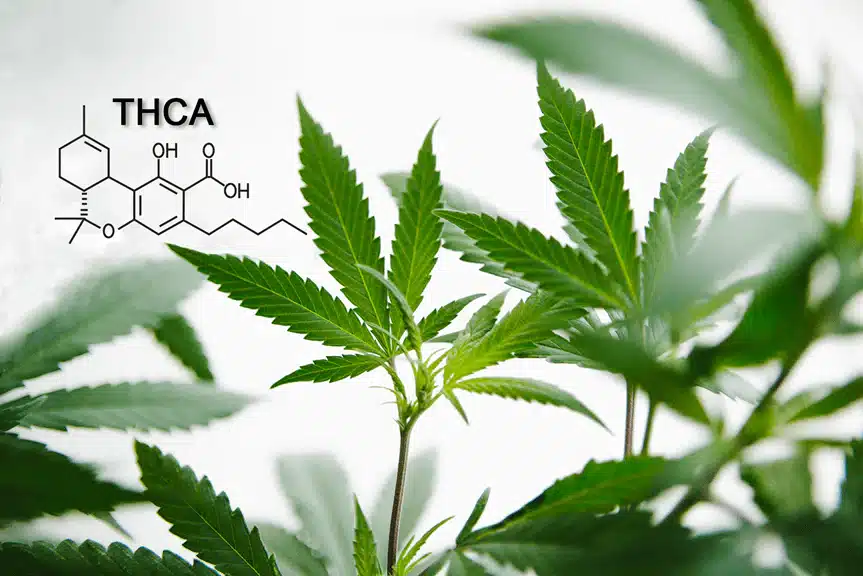
Close-up of cannabis plant leaves with the chemical structure and label "THCA" displayed in the top left corner.

What Is THCa and How Is It Legal?

The world of cannabis compounds has grown recently, sparking interest and research. One substance gaining attention is THCa flower, popular among wellness enthusiasts seeking alternative relief like those found in Goon THCA Flower. Understanding its legal status is crucial due to complex regulations. Knowing the legal framework is important, as cannabis laws can be ambiguous in many areas. It’s important to differentiate between hemp-derived products, which are legal, and those facing stricter regulations. This article explores the legality of THCa flower and the regulatory landscape, offering insights to help consumers stay within legal boundaries. We’ll examine its potential benefits and how to make informed purchases responsibly.


Understanding THCA Flower:

THCa, or tetrahydrocannabinolic acid, is a naturally occurring compound in the cannabis plant. It serves as the precursor to THC (delta-9 tetrahydrocannabinol), the psychoactive component of cannabis. Unlike THC, THCa is non-psychoactive in its raw form, lacking the euphoric “high” commonly associated with cannabis.

Upon heating through processes like smoking or baking, THCa undergoes decarboxylation, transforming into THC and activating its psychoactive properties. This conversion unlocks the full potential of THCa and producing the desired effects associated with THC consumption of products like purple runtz flower and gumbo strain flower.


Benefits of THCa Flower:

Research into the potential benefits of THCa flower is ongoing, suggesting a range of therapeutic applications as an alternative medicine. These may include pain management, anti-inflammatory effects, neurological health, anti-nausea properties, mood regulation, appetite stimulation, muscle spasms alleviation, and sleep enhancement.

However, it’s essential to approach these potential benefits with caution and consult healthcare professionals before incorporating THCa flower into routines or practices.


Potential Side-Effects of THCa Flower:

Users should be aware of potential effects of smoking THCa such as dry mouth, dry eyes, dizziness, lightheadedness, increased heart rate, temporary cognitive impairment, heightened sensory perception, paranoia, or anxiety. These side-effects are the same for both hemp or recreational cannabis products.


Consumption Methods for THCa Flower:

Exploring various consumption methods for THCa flower offers different experiences, each influencing the onset time, duration of effects, and outcomes. Methods include vaporization, smoking, dabbing, edibles, sublingual consumption, topical applications, and tea or infusions.


THC Flower Legality:

The legality of THCa flower is closely tied to its association with legal hemp and CBD products. Industrial cannabis, recognized for its low THC content, is legally distinct from marijuana. THCa flower primarily sourced from industrial hemp strains with THC levels below the legal threshold often falls within the boundaries of legality, particularly in jurisdictions where industrial hemp is permitted.

Federal legality is governed by the Agricultural Improvement Act of 2018 (Farm Bill), which legalized the cultivation and commerce of industrial hemp and its derivatives with THC levels under 0.3% by dry weight. However, state regulations play a crucial role, necessitating compliance with both federal and state laws.

Laboratory testing and certification ensure compliance with THC limits and provide assurance of product authenticity, enhancing consumer safety and industry credibility. Kanna CBDs THCA flower follows all laws and the 2018 Farm Bill.


How to Buy Reliable THCa Flower Safely:

Purchasing THCa flower requires thorough research into reputable vendors and dispensaries. Factors to consider include product labeling, online vs. in-store purchasing options, payment and shipping methods, vendor reputation, and product sourcing practices.

Here at Kanna Collective, we provide you with reputable, lab tested products with discreet shipping to anywhere in the upper 50 states! Shop our THCA flower here.


Conclusion:

Understanding the legal landscape, potential benefits, and consumption methods of THCa flower empowers consumers to make informed decisions aligned with legal boundaries and personal preferences. Responsible consumption contributes positively to the broader landscape of natural remedies and wellness practices. Don’t hesitate to reach out to us about any questions you may have about THCa or cannabis overall.

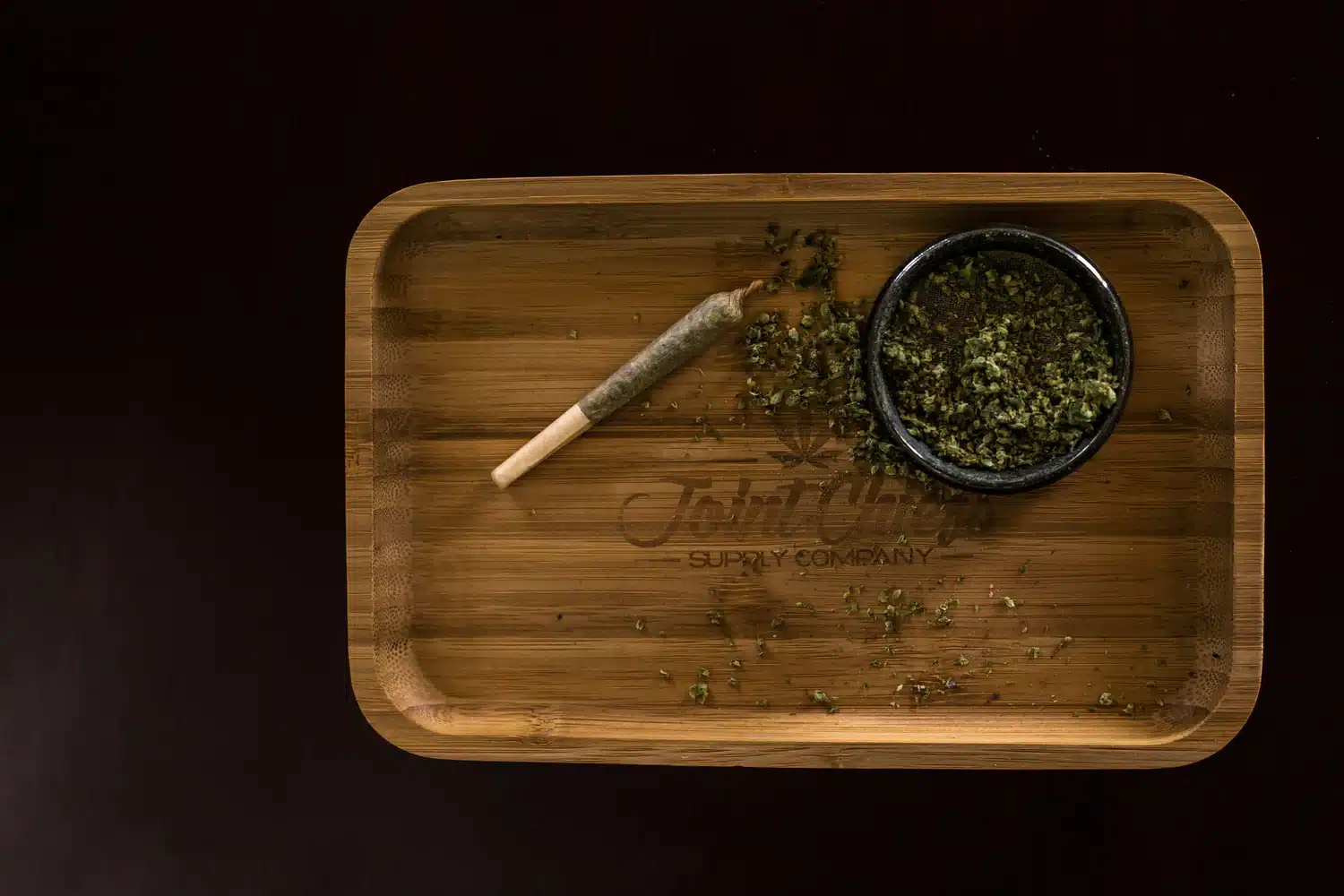
A rolled joint and a small bowl of loose cannabis sit on a wooden tray with scattered cannabis pieces.

How To Roll a Joint

Exploring the world of cannabis offers a diverse range of ways to enjoy it, and rolling a joint is a popular choice that fosters communal sharing of quality flower from Kanna CBD!

Before delving into the art of rolling a joint, it’s crucial to grasp the distinctions between joints, blunts, and spliffs. Although these terms are often used interchangeably, each has its unique characteristics. Joints utilize thin rolling papers, a filter, and cannabis flower. In contrast, blunts employ a cigar or blunt wrap, while spliffs resemble joints but also contain dried tobacco. While blunts and spliffs offer different experiences, joints are more widely available at most dispensaries, with Kanna Collective providing convenient pre-rolls!

Now, let’s explore the qualities of an excellent joint. While not every joint needs to be flawless, certain key aspects should be considered. A well-rolled joint should have a filter to prevent inhaling flower chunks, safeguard the lungs, and ensure a complete and enjoyable puff. Moreover, a tightly sealed joint avoids spills and fire hazards, while packing the joint densely and evenly ensures a consistent burn and flower concentration in each inhale.

If you prefer a visual representation of how to roll, scroll to the bottom of the blog!

If you’re ready to roll your own joints, gather the following:

  • Quality rolling papers
  • Cannabis strain of your choice
  • Cannabis grinder (optional)
  • Joint tips (store-bought or homemade)

Choosing high-quality rolling papers, cannabis flower, and joint tips contributes to an enhanced overall experience! Check out our top notch THCa flower here.

To roll a joint:

  1. Grind your flower for even filling and a consistent burn.
  2. Place a filter on one end of the rolling paper
  3. Sprinkle ground flower onto the rolling paper while holding the filter end.
  4. Shape and seal the joint tightly, moistening the glue to secure it.
  5. Pack the cannabis flower evenly into the joint using a pen or pencil.
  6. Seal the open end by twisting the paper with moistened fingers.

Now, you’re ready to enjoy your joint! Hold the filtered end in your mouth, light the other end, and take small hits for a pleasant experience.

Additional tips to enhance your joint-rolling skills:

  • Start with a smaller amount of flower for easier rolling and a more even buzz.
  • Ensure your cannabis flower is fresh for the best experience.
  • Have fun with your joint rolling, experimenting with different shapes and sizes.
  • Store joints in a container to maintain freshness.

For those who prefer convenience, pre-rolls are an excellent option, offering pre-packed flower for easy enjoyment. If rolling proves challenging, consult our staff or research online for helpful tools.

For the best cannabis products in Charlotte, North Carolina, including flower and quality joint-rolling supplies, visit Kanna CBD! Our knowledgeable staff can assist you in finding the perfect product for your preferences, whether it’s high-concentration flower or low-concentration edibles. Order online or in-store, and embark on a happy rolling and enjoyable cannabis experience!


Need a visual? View our video below!
A molecular structure labeled CBG (cannabigerol) is displayed over a background of green cannabis leaves.

What is CBG?

Cannabigerol (CBG), “The mother of all cannabinoids,” is one of the many cannabinoids found in the Cannabis Sativa plant. CBG is lesser known than its famous cannabinoid cousins CBD and THC, but it has properties that are unique to it as a therapeutic compound. CBG was discovered in the 1960s but most of the research conducted on it has been within the last decade, due to its relative scarcity and small concentrations in the plant.

So what is CBG?

Cannabinoids all start off as Cannabigerol, or CBG. CBG’s precursor, cannabigerolic acid, or (CBGa) is the primary cannabinoid. It is non-psychoactive and can be thought of as the “stem cell” of other cannabinoids found in cannabis. It is the precursor to the three major branches of cannabinoids:  tetrahydrocannabinolic acid (THCa), cannabidiolic acid (CBDa), and cannabichromenic acid (CBCa). The plant has natural enzymes, called synthase, that break the CBGa down and mould it toward the desired branch. When exposed to heat, or prolonged UV light, CBGa will break down and become CBG. This break down explains the low concentration of CBG in most strains. Besides its role in forming other cannabinoids, CBG has a number of important effects of its own.

CBG is neuroprotective, perhaps more than any other cannabinoid. Studies show that CBG is effective against Huntington’s Disease; it protects against inflammation and oxidation in the brain, two main causes of neurodegeneration. CBG has also been shown to boost serotonin levels, which plays a crucial part in healthy brain functioning.

How can CBG help people?

Research has shown that CBG is massively beneficial to the gastrointestinal tract in many ways. It has been proven to protect against NSAID medication (Advil, Aleve) or alcohol induced irritation and lesions by reducing the gastric acid secretions of the stomach. Research confirms that CBG is, like CBD, effective at combating gastrointestinal cancer cells. CBG also has implications of appetite control and regulation.

Consumers have reported that CBG in topical form can be used to spot-treat acne and improve general dermatological health.

THC and CBG work wonderfully together at inducing sleep, as there is an entourage effect with cannabinoids when taken simultaneously. Our Zkittles vape cartridge, Bubba Kush preroll, or Delta 8 is Better oil are great when used with CBG for alleviating insomnia.

Conclusive research states that CBG is possibly therapeutic in treating glaucoma, as all cannabinoids are to some extent. But CBG may be the most promising of them in relieving pressure on the eye which causes glaucoma.

Structural formula of Delta-8-THC (Delta-8-Tetrahydrocannabinol) shown with chemical bonds and labeled molecular groups.

Delta 8 THC

Delta-8 THC has become all the rage, especially in places where cannabis is still illegal. Delta-8 THC is chemically very similar to Delta-9 THC, and differs by one chemical double-bond that is on the 8th carbon chain as opposed to the 9th. Delta-8 THC binds to the CB1 receptor in the endocannabinoid system (ECS), just like Delta-9 THC. The CB1 receptor is responsible for mediating most of the psychotropic effects of THC.

Delta-8 THC has all of the medicinal properties of its sibling, Delta-9 THC. Delta-9 THC is one of the main cannabinoids out of over 100 cannabinoids found in cannabis, it’s also what causes the high; it also is anxiolytic, an appetite stimulant, nausea and pain reducer, and an anti-inflammation medication.

So yes, Delta-8 THC gets you high and will show up on a drug test, since tests look for the metabolites of THC and not just Delta-9. The high is smoother and less erratic and does not cause paranoia or anxiety.

Edibles, tincture and vape cartridges are the way to go, as Delta-8 THC is not readily found in flower and Delta-8 THC “flower” is just hemp sprayed with Delta-8 THC.

Now, the legality of it: since Delta-8 THC is derived from hemp, and contains less than 0.3% Delta-9 THC, it is legal under the Farm Bill of 2018. However, the DEA is making moves to criminalize it, under the pretense that it is too similar to Delta-9 THC.

If a focused, calm high is what you’re looking for, ask us about Delta-8 THC.

Incorporating Hemp into your daily routine.

Four Easy and Effective Ways to Add Hemp CBD Into Your Wellness Routine


Are you tired of hearing how important it is to incorporate that natural product or ingredient into your wellness routine? If you are, we don’t blame you. The wellness market is oversaturated with so many must-haves and, after a while, you start to feel numb to new and actually helpful products. If you are picky about adding new products into your daily routine, you might have been skeptical about including hemp-derived CBD. Reports show that one in seven Americans uses CBD-based products, primarily for pain, anxiety, and sleeplessness. However, the vast majority of Americans don’t understand the incredible advantages this component offers.


Many know about the use of CBD solely in the form of tincture or oil but the market offers various interesting ways to benefit from this component. But, before we get into the practical ways to include hemp-derived CBD into your wellness routine, let’s discuss the why behind this component.


Why Should CBD Be an Important Part of Your Wellness Routine?

Cannabidiol (CBD) is a non-psychotropic compound found in the hemp plant. CBD became such a popular compound in the wellness world because it’s a powerhouse that wakes up the body’s endocannabinoid system (ECS). According to studies, the endocannabinoid system is a newly-discovered system of receptors “scattered” all around the body and the brain. The ECS maintains the homeostasis (balance) of the human organism by playing a significant role in regulating the immune system, mood, appetite, pain sensation, and more.


For centuries, people have been using marijuana for medicinal purposes. Today, people are avoiding the plant because of its high levels of tetrahydrocannabinol (THC), the psychotropic component in cannabis. With CBD, it’s an entirely different story because this component does not create any psychotropic effect, or get the user “high.” CBD does have psychoactive effects (different from psychotropic), which means it has the power to drive change in the body without getting the user stoned.


Four Easy and Effective Ways to Incorporate CBD into Your Wellness Routine

  1. CBD Bath Bombs for Relaxation and Sleep


Exhausted after a long day? If you are an avid user of bath bombs (they are kind of addicting), consider switching from a “regular” to a CBD-infused bath bomb. CBD helps relax your entire body, so you are guaranteed a chill and quiet evening followed by a good night’s rest. This potent and natural CBD bath bomb will help you relax and heal at the same time. Formulated with a powerful combination of natural ingredients, this vegan CBD bath bomb brings up to 50mg of healing CBD into your bathtub.


Soak your skin in the soothing properties of CBD and shea butter, perfect for moisturizing and protecting your skin. The anti-inflammatory effects of CBD will calm your skin and give it a much-needed break from all of the daily stressors.


Winding down after a long day or long week is vital for your wellbeing. Wash off all of the negative events of the day with our natural, additive-free bath bombs. We promise you, you won’t find a better product for your bathtub nighttime wellness routine.


  1. CBD Tincture to Jumpstart Your Morning


Primarily used to help anxiety and pain, CBD tinctures have great absorption rates — if taken sublingually (under the tongue) — and provide you with a long-lasting dose to help you jumpstart the day. CBD tinctures are everywhere, but not all of them are made equal. Kanna CBD’s Vitality CBD Tincture contains 1000 mg of full-spectrum hemp extract. The reason why you should always go for full-spectrum CBD products is that they contain an abundance of hemp cannabinoids, terpenes, and other nutrients naturally found in the hemp plant.


According to research, the more components your CBD oil contains, the more potent it is. If the tincture you are getting is rich in various hemp compounds, they will work together to create a more powerful effect, also known as the “entourage effect.” This effect will not be initiated if you are using a CBD oil that contains CBD as its only ingredient and has no terpenes. Terpenes play a major role in the potency and effectiveness of a CBD extract. For example, limonene is a hemp terpene also found in citrus fruits like oranges and lemons and is considered a strong mood booster that can relieve stress and anxiety due to its anti-inflammatory and antioxidant effects. Therefore, our Vitality CBD Tincture is enriched with organic coconut oil, organic hempseed oil, and the terpene limonene.

  1. Healthy Skin with CBD Birch Tar Recovery Bar


Traditionally used for treating acne, skin irritation, and discoloration, this Birch Tar Bar is pure African Black Soap infused with CBD and Sea Clay, making a powerful anti-inflammatory and antiseptic combo. Coming straight from nature, the African Black Soap’s drying properties have an immediate effect on skin irritations. If you are dealing with common skin conditions, you should try a different approach to the usual treatments or add this natural CBD-infused product to your routine.


The Sea Clay will hydrate and moisturize your skin, which makes this product perfect for dry skin or skin conditions such as acne, psoriasis, and eczema. In fact, one study revealed that the use of black soap helps reduce symptoms of various dermatological conditions. Although more research is needed on the connection between CBD and skin health, some studies show positive results. A study that evaluated the health of the skin before administration of a topical CBD ointment found that the CBD-enriched ointment without THC can significantly improve the lives of patients with certain skin disorders.

  1. Pain Relief with CBD Cooling Gel


As we get older, our bodies become less flexible and more prone to different injuries, pains, and aches. Having a product that helps your muscles and joints heal faster after exercise, long hours of sitting, or acute back, neck, or shoulder injury, can greatly improve your wellbeing. This CBD-infused cooling gel is a powerful formula that provides quick relief from sore and tired muscles, tight spots, and back pain. Ideal for both regular and occasional use, this CBD cooling gel will give you a pleasant massage on the affected area and instantly ease inflamed spots and acute upper and lower back pain. No more tension with this CBD cooling gel as the product addresses a specific area directly.


How does the gel work? When you are using CBD topicals such as this cooling gel, the CBD doesn’t reach the bloodstream but gets absorbed through the skin’s surface where the cannabinoids in the gel interact with the cannabinoid receptors located in the skin. It’s important to note that the skin has low permeability, meaning it only absorbs a small percentage of topicals. So, to increase the effect of CBD cooling gel to the skin, regular use is essential.


Considering the amount of new natural products that promise to boost your wellbeing, you might be skeptical about adding a new one. But, with all of the benefits hemp-derived CBD products offer to the endocannabinoid system, adding at least one CBD product to your routine might be game-changing in the long run. Routines are there to be shaken up and improved, so order your CBD product today and see how it works for you.


Kanna Collective is a Charlotte CBD company dedicated to bringing the purest, most high-quality CBD products on the market. All of our products are based on researched and studied best practices on hemp CBD. 

A hand holds a dropper bottle containing yellow liquid near a cannabis plant with green leaves in an outdoor setting.

Where to Start With CBD?

Since the passage of the Hemp Farming Act in 2018 there has been such a flood of cannabidiol (CBD) products that it’s easy to get overwhelmed by this burgeoning market. So, where to start with CBD?

CBD can be ingested, smoked as flower, or applied topically; it all depends on what your needs are and discovering an intake method that works best for you.

CBD is a non-psychoactive phytocannabinoid of the cannabis plant with enormous healing potential. As shown below, CBD and THC have practically the same molecular structures, though their bondings are different.

THC and CBD

CBD interacts with the CB1 and CB2 receptors in the body’s endocannabinoid system and alters the release of neurotransmitters in the brain.

As such, CBD is an effective medication for grave seizure disorders that do not respond to anti-epileptics; the research on this opened the doors for many other ailments to be research and treated with CBD: inflammation, depression, migraines, and nausea, to name a few.

Terpenes are another major component cannabis and, to be fair, of all plants; most recognizably, they give plants their scents. In cannabis, there are over 100 types of terpenes, which work with CBD to produce an “entourage effect” of therapeutic interactions.

If you suffer from anxiety, Vitality Hemp Oil is the tincture for you. We started with full-spectrum hemp oil and added the terpene limonene to combat anxiety and inflammation; Vitality will have you ready for whatever your days throw at you. Also helpful for anxiety are any number of strains of flower CBD.

If you’re prone to insomnia, Tranquility Hemp Oil is what you need. Just one dropper full and you’ll be enjoying a restful night’s sleep. With a strong beta myrcrene terpene profile, Tranquility is unparalleled for those looking for a natural way to beat sleeplessness.

Kanna Hemp Oil

Research shows that chronic pain from joints and muscles can be alleviated with the use of topical CBD, such as Kanna Cooling Gel.  Another great product that treats pain as well as insomnia is Viva Green Salve; rub on where it aches for pain, or rub some behind the ears and at pressure points for sleep-inducing relaxation.

Kanna Cooling Gel

And there’s always edibles. It’s a tasty treat for your mind and body and perfect for those who are opposed to smoke or those who don’t like the taste of CBD oil. When ingesting hemp CBD products, it prolongs the effects. However, it is slightly less efficient than tincture because when digested, as some of the cannabinoids and terpenes are lost in digestion.

Gummies

Featuring quality-tested and customer approved products, KANNA CBD is here for your needs.

Skip to content